
2023 was a pretty wild year for Tim when it came to gaming.
This was a strange gaming year for me. I spent a lot of time playing old games (coming up on hour 5000 in PUBG, ugh), especially once I got my Steam Deck and started travelling. Most of the new games I played only really happened toward the end of the year, but there were definitely some great ones in there! I also barely touched my PS5, which was perhaps the most disappointing part of the year for me from a gaming perspective.
For this list I’ll be listing what I played on next to the game names.
Honourable Mentions:
Blood Moon (PC)
Blood Moon is a wonderful urban fantasy interactive novel about werewolves and vampires making tough decisions, ripping people to pieces, and maybe a bit of shagging. I love it to pieces and enjoyed it tremendously on my two playthroughs. The only reason it didn’t make my Top 10 is because it was solely written and created by a very close friend of mine, and I don’t truck with conflicts of interest. Even so, I very highly recommend it.
Star Wars Jedi: Survivor (PS5)
Star: Wars – Jedi; Fallen…Order (seriously, these titles) was an excellent game that I loved. It looked fantastic, played great with its mix of exploration and Dark Souls-lite gameplay, and told a legitimately cool Star Wars story with fun characters and solid acting.
Jedi Survivor does much the same. It looks nicer and the levels are bigger (particularly the central hub, which is truly massive), but tells a much more disjointed, less engaging story. Unfortunately, the gameplay also didn’t feel like a significant improvement; in fact, I encountered substantially more bugs this time around, and I also found that many of the new additions felt more like busywork than a true improvement. As such, while I enjoyed Jedi Survivor well enough, it felt less than the sum of its parts.
HITMAN World of Assassination (PC)
The newer Hitman games have brought me endless pleasure through watching other people play them, most notably Giant Bomb and Nextlander with their amazing play throughs. Unfortunately, despite having played all three games in the Hitman trilogy, they’ve never quite gelled for me as anything other than fun sandboxes to poke around in for a couple of hours before getting bored. The launch of World of Assassination, combining all three games together and adding a run-based mode, managed to drag me back for my longest stint yet – I finished the single player campaigns! – but ultimately still led to me having no real interest in sinking myself into the gameplay loop of conquering every element of every stage and getting all the unlocks. HITMAN World of Assassination is an awesome game, even if it continues to remain one I prefer to observe from afar.
Warhammer 40,000: Boltgun (PC / Steam Deck)
Boltgun looks like a 90s FPS and plays like a simpler version of Doom 2016. The goofy aesthetic take on the 40k universe (something that games don’t typically do) is very fun, and the game itself played well. Ultimately, the lack of variety in weapons and enemies made the gameplay loop feel a little too repetitive by the time I’d hit the end of it, but Boltgun was still a hell of a ride. Also bonus points for the dedicated taunt button just being your Space Marine shouting dozens of different 40k-isms.
Like a Dragon Gaiden: The Man Who Erased His Name (PS5)
I have loved all the Yakuza/Like a Dragon games and have no doubt at all I would also love this one, but I just haven’t had the time to devote to playing it properly yet. Kiryu as a goofy spy sounds like an amazing evolution of his character and the classic Yakuza gameplay, and a shorter experience compared to Infinite Wealth also sounds right up my alley.
Game of the Year 2023:
#10 – Turbo Overkill (PC / Steam Deck)
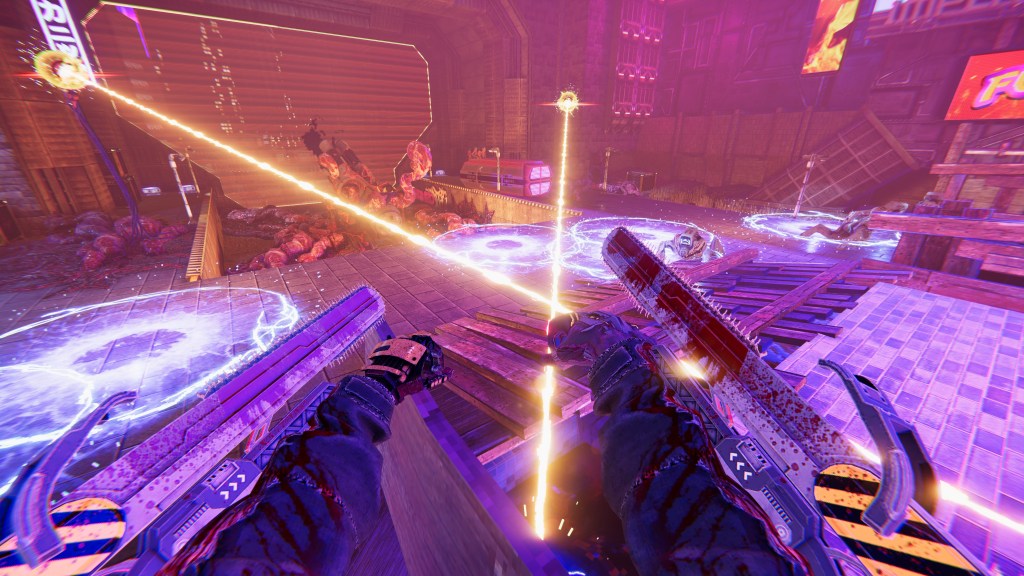
Turbo Overkill is another visual throwback FPS that plays more like Doom 2016, but unlike Boltgun, this one never lacked for variety or sheer insanity (which is saying something when compared to a 40k game). Turbo Overkill is as fast paced and brutal as any game I’ve ever played, and its grimy-cyberpunk-mixed-with-gross-hunks-of-meat aesthetic is disgustingly fun to chainsaw-leg your way through at a speed that would make the original Doomguy blush.
Arena shooters are not my go to when it comes to FPSes (even with my love for Doom 2016 and Doom Eternal, I still prefer original Doom’s gameplay), but Turbo Overkill is one of the better examples of it that I’ve played. With a tonne of interesting and upgradeable weapons and movement abilities, it is very easy to bounce around the battlefield, with the game feeling like less of a combat puzzle than it does a buffet of over-the-top violence, especially as it continues to add new mechanics over pretty much the entire length of its substantial runtime. Add in a great soundtrack, awesome look, and surprisingly decent story replete with some great voice acting from a few industry luminaries, including Jon St. John of Duke Nukem fame, and Turbo Overkill easily rises above its influences to stand alone as a truly unique, gruesome bit of cyberpunk fun.
#9 – Viewfinder (PC)
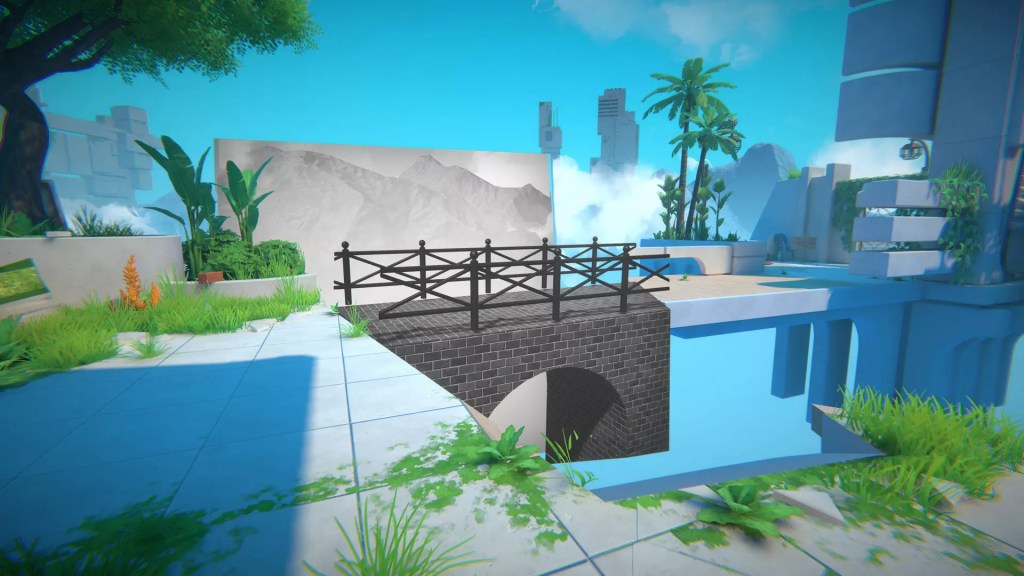
I love a good puzzle game, and Viewfinder is a good puzzle game with a remarkable gimmick: you can find (and later take) polaroid photos and place them into the environment, causing them to overwrite whatever is there as you move into the now three-dimensional photograph. It’s honestly hard to explain clearly in words, but in short: imagine taking a photo of a wall, rotating that photo to the horizontal, and then placing it so that that wall now forms a bridge you can walk across. That’s a minor example of how truly mind-bending the game can get, but the mechanics are demonstrated very well and rolled out cleverly to ensure that any feelings of being stuck do not last so long as to be overwhelming.
Unfortunately, I felt like Viewfinder had only really started to find its potential when it ended – the game was quite easy until the last stages, and I breezed through it hoping for harder content that unfortunately never really came. Also, while it didn’t overly bother me, this game is possessed of a fairly on the nose and rather cloying story that I didn’t feel it really needed. It didn’ttake away from the game for me, but also added nothing except a cute Scottish-sounding cat I could pat occasionally.
Still, despite these criticisms, Viewfinder was a fun experience. I truly hope the developer can take the ideas they came up with here and run with it to make a spectacular Viewfinder 2, or whatever else they look at doing.
#8 – Thirsty Suitors (Steam Deck)

This game wasn’t even on my radar until the very end of 2023 (thanks Lachie), and it ended up being perhaps the biggest surprise. A hodgepodge of game styles (Tony Hawk skate tricks / basic JRPG style turn-based combat / rhythm games / etc.) are wrapped around a lovely story of a young woman returning to her hometown in late-90s Midwest America to make amends with her family and the string of exes she left behind.
Thirsty Suitors didn’t particularly engage me from a gameplay perspective – I’ve never been into skating games, and the combat and minigames got repetitive quickly. But the story it tells with both great humour and sincerity, combined with the wonderfully stylish graphics and soundtrack, kept me hooked through to the end. It was also great to see a game with such a wonderfully varied cast of characters, especially as it delved into the Indian and Sri Lankan heritage of the protagonist, examining everything from cultural views on dating through to cooking some truly delicious looking dishes with your parents.
A very fun game with real heart.
#7 – Warhammer 40,000: Rogue Trader (PC / Steam Deck)
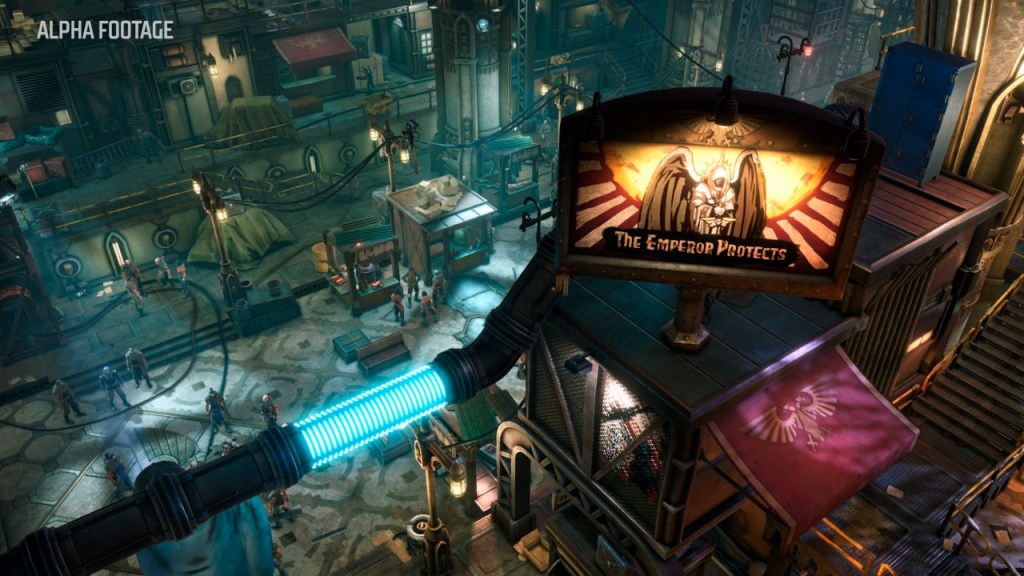
Rogue Trader is a strange game for me, as my first instinct when discussing it is to focus on the negatives: the rampant bugs that range from stupid through to game-breaking; the laughably bad in-game cutscenes; the confusing and outright broken levelling system; and the main quest that occasionally feels like it is just skipping from plot point to plot point with very little connective tissue. In its current state, as with Wrath of the Righteous before it, I find it hard to recommend Rogue Trader without a million caveats, and I find Owlcat Games’ continued instance on selling a product full price at retail when it is close to broken incredibly frustrating from a consumer perspective.
And yet despite all that, Rogue Trader is a hell of a game. The sheer scope of it is breath-taking, and only once before have I seen a game so effortlessly capture the goofy grimdark essence of Warhammer 40k in Darktide, and never with the sheer amount of content that this one has. Putting players into the thrice-blessed boots of the titular Rogue Trader – something of a mix between a privateer, a merchant prince, and a ravening warlord – was a stroke of genius, allowing you the freedom to explore a huge swathe of space from a position of power that is almost unheard of for the vast majority of people in the setting.
Owlcat uses the breadth of the setting to its full effect as well, telling stories that range from saving planets from falling to the ravening powers of Chaos, through to smaller, more intimate stories of horror and wonder amongst the myriad aliens, mutants, cultists, and more that are scattered around the dozens of explorable solar systems in the Koronus Expanse. Exploration is well rewarded with well-written story content, cool loot and experience, and a million nods to the lore (and the players) scattered throughout.
Rogue Trader is a troubled game that frequently creaks under its own weight, and yet when it works, it is a truly singular CRPG experience and one that successfully captures the appeal of its setting.
#6 – The Case of the Golden Idol / Golden Idol Mysteries: The Spider of Lanka / The Lemurian Vampire (PC / Steam Deck)
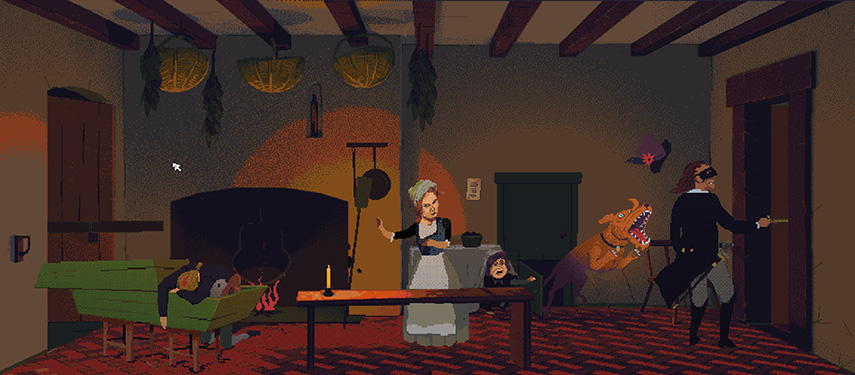
The biggest compliment I can pay to The Case of the Golden Idol and its two expansions is that it feels like something I would have played in primary school with a group of friends huddled around the crappy old beige boxes nestled in the corner of the classroom. Color Gray Games have successfully captured a very specific edutainment feel with these throwback headscratchers, even as they have evolved the puzzles therein to something eight-year-old me would never have come close to figuring out (and which are probably a little too nasty for the likes of Carmen Sandiago to truck with).
The (typically) murder mysteries within Golden Idol are always fun to solve, rewarding careful reviewing of all the facts whilst also supporting the occasional logical leap through its intuitive interface. Hints are available in tiers as well – always a welcome tool in the arsenal of any puzzle game – and the interesting storytelling you get around the edges about the cursed Golden Idol and the lives it ruins gives the alt-history setting a surprising amount of heft.
I highly recommend the whole suite of Golden Idol content that is available and cannot wait for its groovy looking sequel.
#5 – Warhammer 40,000: Darktide (PC)
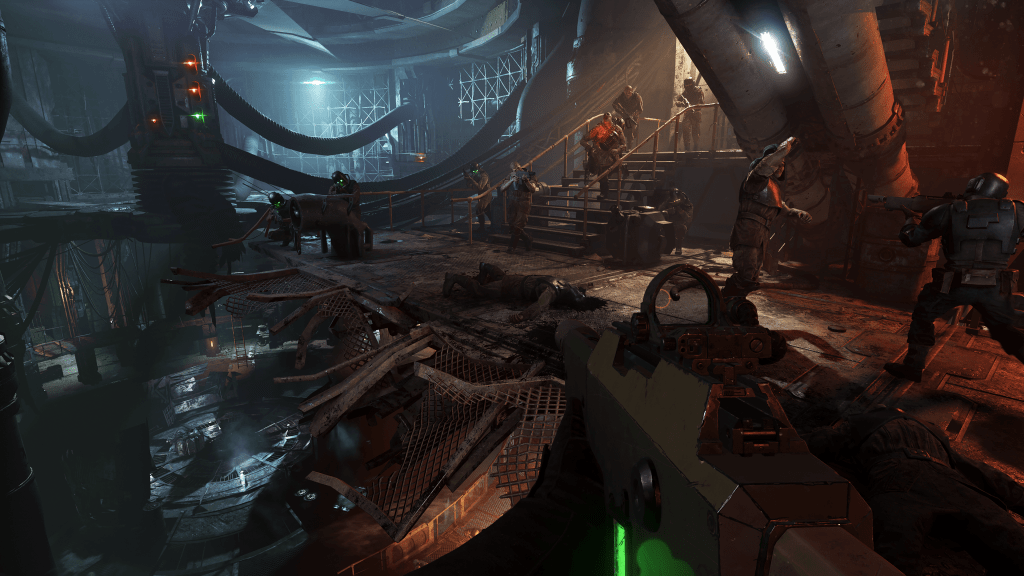
Let’s chainsword the head off the elephant in the room straight up: Darktide did not come out in 2023. However, a major patch did that essentially remade the game from the ground up, making it feel almost completely different to how it did at release. This also just happened to coincide with me actually deciding to play it after not enjoying it when it first came out, and by the Emperor am I glad that I gave it another chance.
Darktide is the most fun I’ve had with a PVE FPS since the original Left 4 Dead. Each class feels highly distinct, and even within a particular achetype the skill trees and weapon choices are such that you could have a party of four identical characters and each could play very differently to the other, which is just awesome for a game built around playing the same content over and over. Furthermore, the stages themselves each feel very distinct and almost like characters in their own right, with quirks and challenges that make them unique both visually and from a gameplay perspective – I still remember the first time I stepped outside into sunlight after multiple missions in the dank, dark depths of the underhive, and how disorienting it felt.
A game like this could look and sound amazing (and this one does, from gunfire to music, it is remarkably good), but it’s the combat itself that makes or breaks it. Thankfully, Darktide delivers here as well: weapons are all satisfying to use, from combat knives to bolters to flamethrowers to chainswords, every single one feels hefty and lethal. Even better, the enemies you are using them on come in a big variety, from easily dispatched zombies and cultists you’ll blow chunks out of, through to a large array of dangerous specialists that punish the unwary or the lone wolf. The occasional boss also makes things extra hairy, and the game ensures it never gets too easy through having multiple levels of combat challenge and additional factors that can spice up a particular stage.
Darktide truly captures its Warhammer 40k setting remarkably, from the details of its graphics, through to its organ-heavy soundtrack, and of course its brutal combat. The fact that it is also a phenomenal game with a tonne of content and ongoing support just makes it that much better.
#4 – Shadow Gambit: The Cursed Crew (PC / Steam Deck)
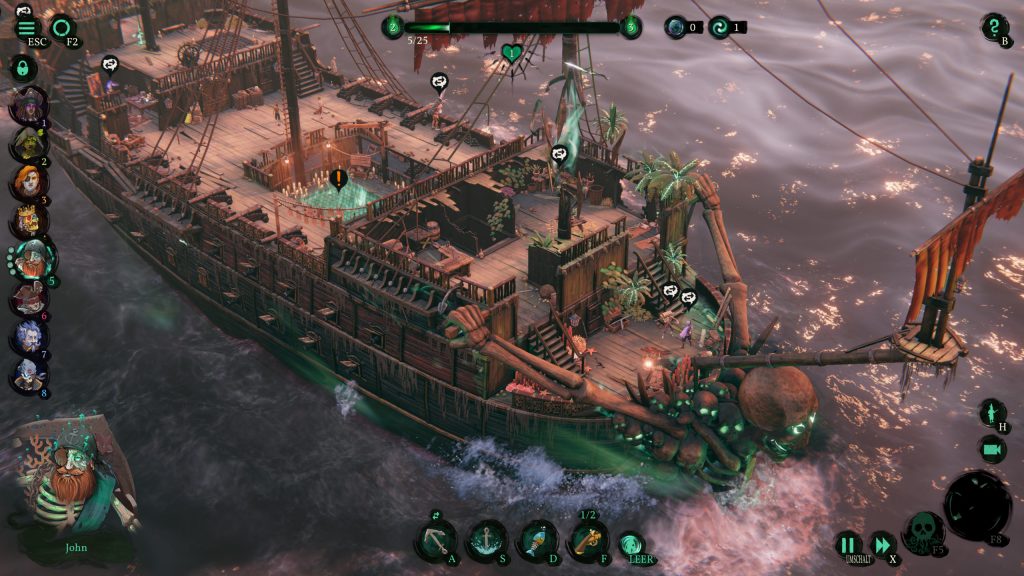
The latest possible entry into my list (full disclosure: I first booted it in late December), Shadow Gambit is the last and best game from Mimimi (RIP) in the stealth strategy genre that I’ve had a love/hate relationship with since bashing my head against the original Commandos games as a kid.
The genre has come a long way since then, in no small part thanks to the work of Mimimi with their Shadow Tactics and Desperado games, and Shadow Gambit is the pinnacle of their work in the space. Unlike most such games, which traditionally have been a puzzle to be meticulously pulled apart one perfectly executed garrotting at a time, Shadow Gambit is instead something of a sandbox, allowing you to pick and choose a crew of three characters to go into a mission with. Each of these characters (and there are a large number available) have vastly different, often fantastical abilities, ranging from the mundane (a whistle to distract a guard from his post) through to the wonderfully deranged (a portable cannon the can reel people in and then launch them at other people, or to distant points). Each mission is itself filled with variety, with multiple insertion points and unlockable exits, as well as numerous paths, times of day, and more. Even better, a tonne of game mechanics exist to reward variety and experimentation, helping to push players away from getting too comfortable with what they consider an playstyle.
With a charming story and characters that really lean into the cursed pirate stereotype (think Captain Barbossa and the Black Pearl crew, but nicer), stylish graphics, and razor-sharp gameplay, Shadow Gambit: The Cursed Crew is a phenomenal game and a hell of an epitaph for a studio that quietly put out banger after banger. Mimimi will definitely be missed.
#3 – The Expanse: A Telltale Series (PS5 / PC)
I love the Expanse novels. I love the Expanse TV series (I actually think it’s probably tied with Battlestar Galactica as the best sci-fi ever made for television). I also love Telltale-style narrative adventure games. As you can imagine, when this game was announced I was salivating at the prospect. Add in the truly wonderful Cara Gee reprising her role as Camina Drummer, and I was well and truly onboard.
Thankfully, the Expanse did not disappoint. Telling the story as a prequel to the events of the first season of the TV series, the game follows Drummer in the role of XO of a scavenger ship, exploring wrecks within the asteroid belt of the solar system for valuable components to be sold. It is a difficult, thankless job, and one that is highly dangerous, as of course Drummer and the crew of miscreants she serves with are pulled into a chance to get rich that brushes up against the edges of some established Expanse lore and characters in a fun way.
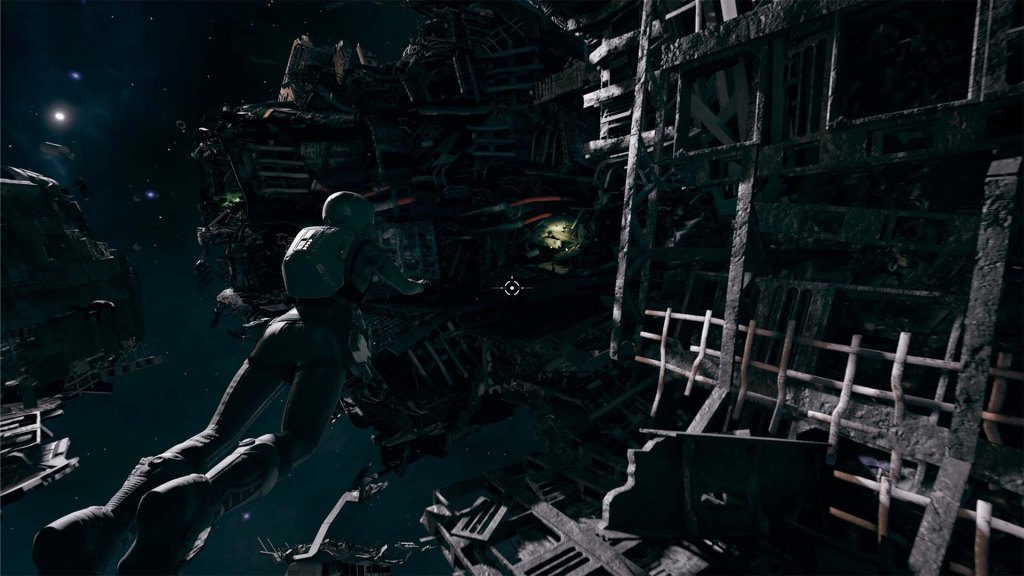
What most surprised and impressed me about this game was actually the gameplay (probably a shock to anyone that consider the Telltale games barely interactive). A good chunk of the game is spent exploring wrecked vessels, jetting around them in your space suit in a fully three-dimensional space as you hunt for valuables, find clues to the ongoing mystery you are playing through, and otherwise get to marvel at what it looks like to see the intermingled wrecks of UNN and Martian warships smashed into each other like children’s toys. The sense of scale as you float around these hunks of metal in deep space is truly awesome.
Of course, the meat of the game is in the social interaction and “X will remember that” goodness, and in that regard the Expanse also does Telltale justice, providing one of the better examples of branching story and interactions through the fully fleshed out crew, while also rewarding exploring more thoroughly with additional opportunities to get to know people better, and perhaps give them trinkets or information that might make them more positively inclined toward you. A particular interaction later in the game stuck with me, as the relationship I had built with one of the crew gave me the opportunity to help him deal with a panic attack, something that really struck me in the moment as feeling like it was possible because of the specific way I had played my version of Drummer.
Overall, the Expanse is perhaps the best Telltale game I’ve played, and a hell of a love letter to both its source material and also this style of adventure game, and one I heartily recommend regardless of familiarity with the setting.
Oh, there’s also a standalone episode where you play as Chrisjen Avasarala while she attempts to vote in the United Nations parliament while trapped in a bunker. I had no idea how badly I wanted to be Shoreh Aghdashloo drinking scotch and viciously swearing her way through political crises until I got the chance to, and now I would happily play a full-length game as Avasarala if Telltale wanted to throw me a bone here.
#2 – Baldur’s Gate 3 (PC / Steam Deck)
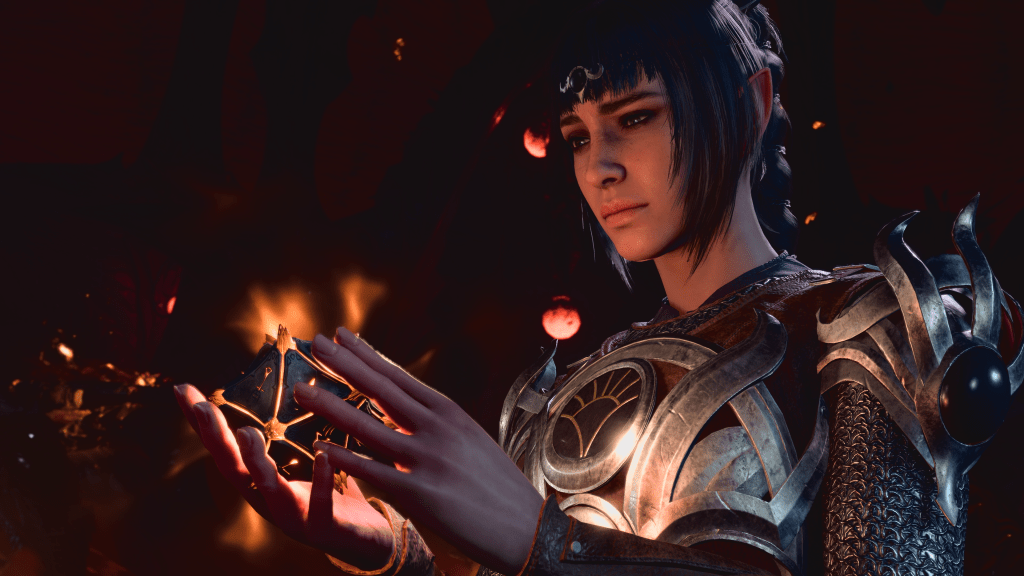
Baldur’s Gate 3 is probably the best CRPG ever made and is certainly the best D&D video game ever made. It may actually be up there in the list of best games ever made, period. So that’s how I’m going to talk about it, rather than focusing on the obvious fact that this truly incredible game happens to be ranked second on my personal list.
I have a huge affinity for the Baldur’s Gate series in particular. BG1 was a formative game for me, and BG2 sent me over the edge into being a massive CRPG fan and a lover of the Forgotten Realms setting of D&D. When BG3 was announced, I was sceptical – why was this game being made now? Why was it being set so long after the previous games, especially when their plot had been wrapped up very neatly? Why was it being made by Larian, a studio that make very highly regarded CRPGs, but ones which I personally have never really taken to?
It wasn’t until the game released in Early Access that my doubts began to be laid to rest, and anticipation began to build. I avoided touching the game until it finally came out, buoyed by all the positive stories I had heard about it. I bought a Steam Deck specifically to play it, as I was going to Europe for five weeks not long after it released, and I wanted to get to experience it before the inevitable tide of spoilers hit and diminished the experience.
What I found not only lived up to my expectations; it blew them away. No other CRPG I have ever played has better captured the tabletop roleplaying experience (even in single player), but even more than that, Larian created a game that combined the best of sitting around a table with your friends with all the best parts that video games can offer.
Compelling characters and stories were brought to life by lovely graphics and incredible voice acting and performance capture (some of the best of ever). The main storyline, though initially a little murky, is quickly revealed to have the twists and turns (and links) that made the previous Baldur’s Gate games so good, and all the side characters and content had an equal amount of love and attention lavished on it (love you Raphael). Even better, just about any conceivable way I could think to approach a particular quest or encounter had been considered and planned for, creating a dizzying number of ways that the game can actually be played.
Replayability is further increased with the various origins, including the Dark Urge, which significantly changes the game again.
While it wasn’t perfect at launch, Larian have dedicated themselves to quickly fixing a tonne of bugs and adding additional content. I honestly cannot wait to dig into another playthrough, and I know I will love seeing it through to the end again and again.
#1 – Cyberpunk 2077: Phantom Liberty (PC)
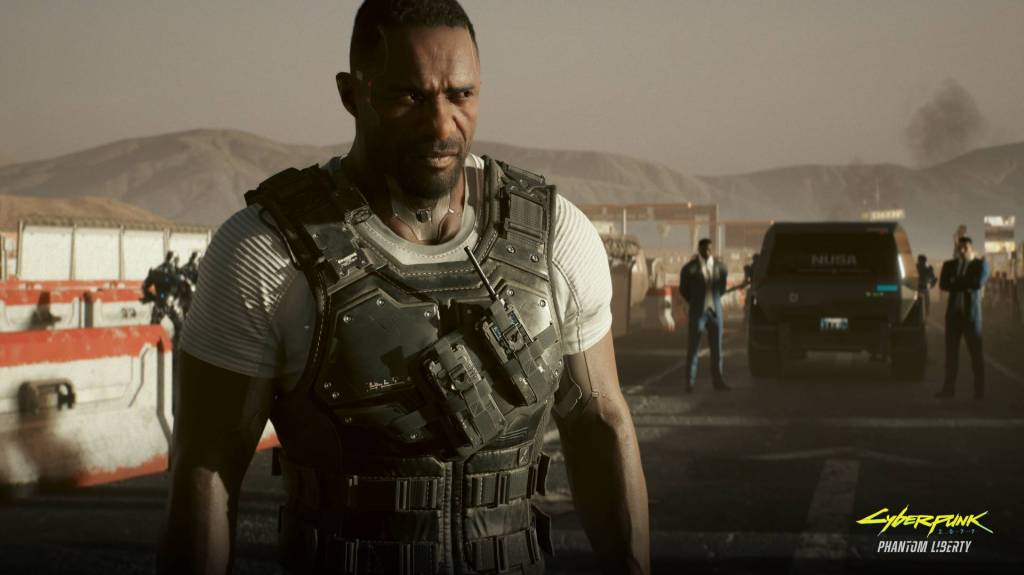
That’s right, an expansion pack for a several years old game is my number one.
I loved Cyberpunk 2077 at launch, warts and all. I was lucky that I had a powerful PC and a relatively pain-free experience when the game first hit, and even with the bugs (oh god, the bugs), I still fell in love with Cyberpunk’s world and characters. I’ve always been more of a sci-fi fan than I am of traditional fantasy, and the cyberpunk genre in particular with its focus on raging against the machine that will inevitably beat you anyway is something that has always resonated with me. As such Cyberpunk 2077 landed for me in a way that it obviously didn’t with a lot of people, even as I fully acknowledge how incredibly flawed, if not outright busted, it was. V’s tragic story, accompanied by the equally tragic Johnny Silverhand, just clicked for me.
When Phantom Liberty was announced, a lot of people saw it as an opportunity for CDPR to make good on the potential of the original game. What we got, I think it is fair to say, blew away expectations. A new setting and story taking place within the main game, Phantom Liberty delivered a lovingly crafted homage to spy capers and action thrillers in general. Set in the combat zone known as Dogtown, the expansion sees V rescuing the President of the NUSA from her downed plane, infiltrating a skyscraper through polluted tunnels to then sneak into a party in dashing formal wear, stealing identities over a high-stakes game of roulette, and more.
The story of Phantom Liberty is phenomenal, not least of which is thanks to compelling writing and performances from a whole host of great characters (chief amongst them Idris Elba’s Solomon Reed). Twists and turns and double and triple crosses abound, and every decision you make feels like it has repercussion and also feels like it is impacting real people and the world around you. The fact that V also has a compelling stake in this whole mess is also a testament to just how tightly written and plotted the whole thing is.
On top of the main storyline, Dogtown itself is also a marvel to explore, built as it is into the half-complete wreckage of a stadium and its surrounds. Side stories and fun exploration opportunities abound, and the area itself feels completely distinct from the rest of Night City whilst seamlessly fitting into the base game.
Speaking of which, CDPR used the launch of Phantom Liberty to essentially remake Cyberpunk 2077’s gameplay experience from scratch. Similarly to Darktide earlier in this list, the developer scrapped the existing skill tree and much of how the combat and other gameplay loops worked, repurposing everything into a much more fun, well-rounded experience that keeps all play styles viable whilst also making the game actually challenging to play, rewarding people for leaning into an archetype and ensuring that any choices made are viable without being broken. It is a hell of an accomplishment, and the huge variety of improvements (revamped police response system, detaching stats and armour from clothing, a whole new cyberware system, etc.) make the game feel the best it ever has, taking it from the highly flawed mess it was at launch to a competent and fun first-person RPG with excellent combat.
The bones of Cyberpunk 2077 have been built upon in such a way that it has stealthily become one of the best games I have ever played. A beautiful, compelling world filled with a fantastic main character (and both Vs are good, even if I do prefer the performance of fem V), phenomenal supporting characters with Johnny, Panam, Judy, et al joined by new favourites Reed, Songbird, and more, and a truly great story with a tonne of heart and multiple paths through; all of this has now melded with top tier gameplay and an experience that runs smoothly, and looks and sounds amazing.
In short, Cyberpunk 2077 has reached its full potential with Phantom Liberty, and I loved it so much that when I finished it, I immediately restarted the full game and finished it again, something that I literally never do. So immersed in the world was I, and so keen to see all the different outcomes from playing it an alternative way, that I smashed through that second playthrough in record time. Even as I sit here now, contemplating a Dark Urge playthrough of Baldur’s Gate 3 or finally diving properly into Like a Dragon, there’s a not insignificant part of me that wants to boot up Cyberpunk again and finally do that Nomad Path playthrough I’ve always been meaning to get around to…




 deadpancooperative.com
Leave a comment